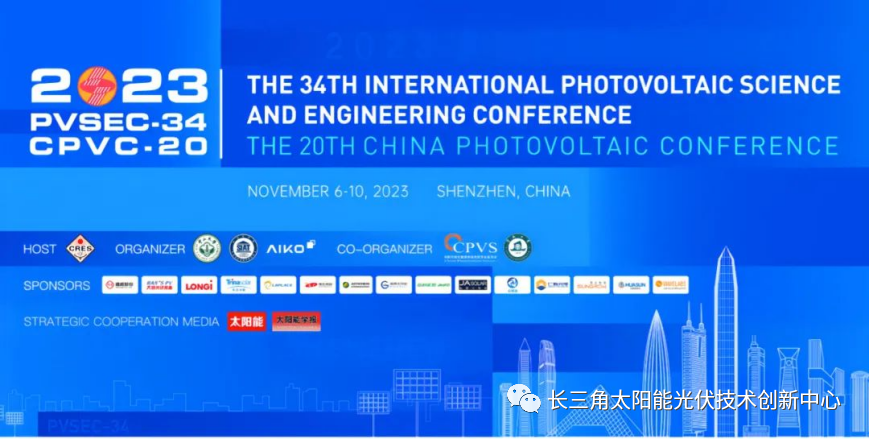
The 34th International Photovoltaic Science and Engineering Conference (PVSEC-34) and the 20th Chinese Photovoltaic Academic Conference (CPVC 20) were held in Shenzhen from November 6 to 10, 2023. Dr. Pierre Verlinden, Chief Scientist of the Yangtze Institute for Solar Technology (YIST), was invited to attend the event and deliver a keynote speech.
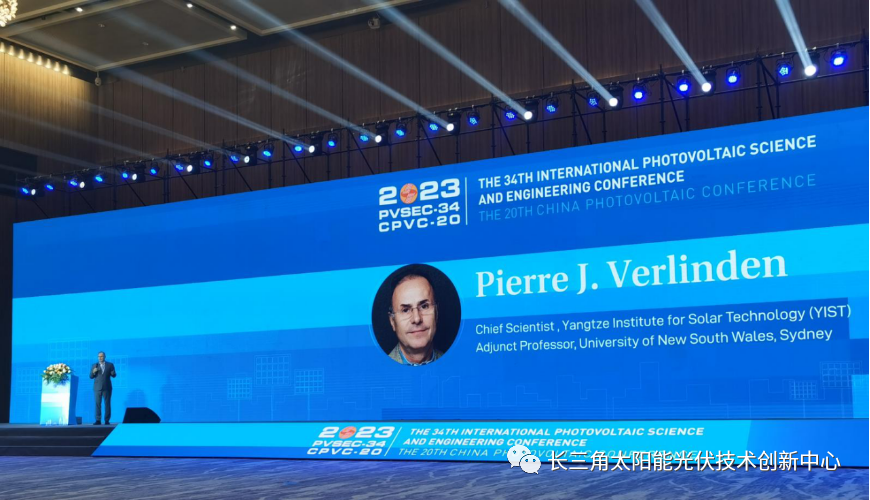
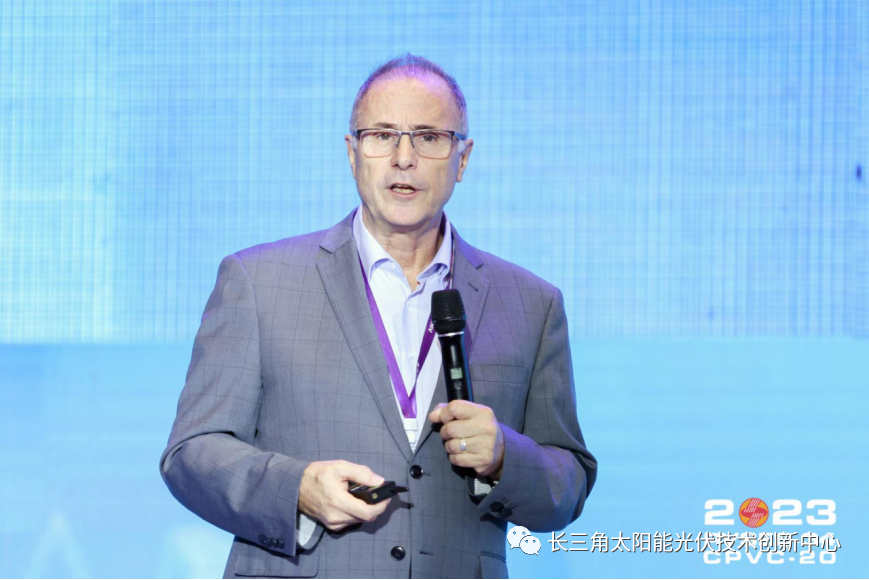
In his address, he pointed out that global warming has become a critical challenge facing humanity. The eight-year period from 2015 to 2022 has been the warmest on record, with temperatures exceeding the threshold of +1.3°C in certain years. It is highly likely that this record will be broken in the future, with temperatures surpassing the +1.5°C threshold. Addressing this issue requires the large-scale replacement of traditional energy sources with renewable energy, among which photovoltaic energy will play a leading role. However, according to statistics from the International Energy Agency (IEA), the current pace of PV installation is far from sufficient to meet the global carbon neutrality target. We need to accelerate the installation speed to reach a total installed capacity of 70TW, or 7kW per capita, by 2050–2055. Of this total, China needs to achieve 9TW of installed PV capacity. Looking ahead to the next decade, we must ensure an annual growth rate of 25%. While maintaining system reliability, achieving indium-free and bismuth-free PV technologies, and reducing silver consumption to below 2mg per module are key research priorities as we strive to improve power generation efficiency.
During PVSEC-34, YIST participated in presentations, session chairing and poster exchanges across multiple parallel sessions, yielding fruitful outcomes. At the closing ceremony, the intelligent PV module technology developed by Dr. Chen Wei’s team was recognized as one of the highlights of its respective parallel session.