




Startup China · Special Edition
Exclusive Interview
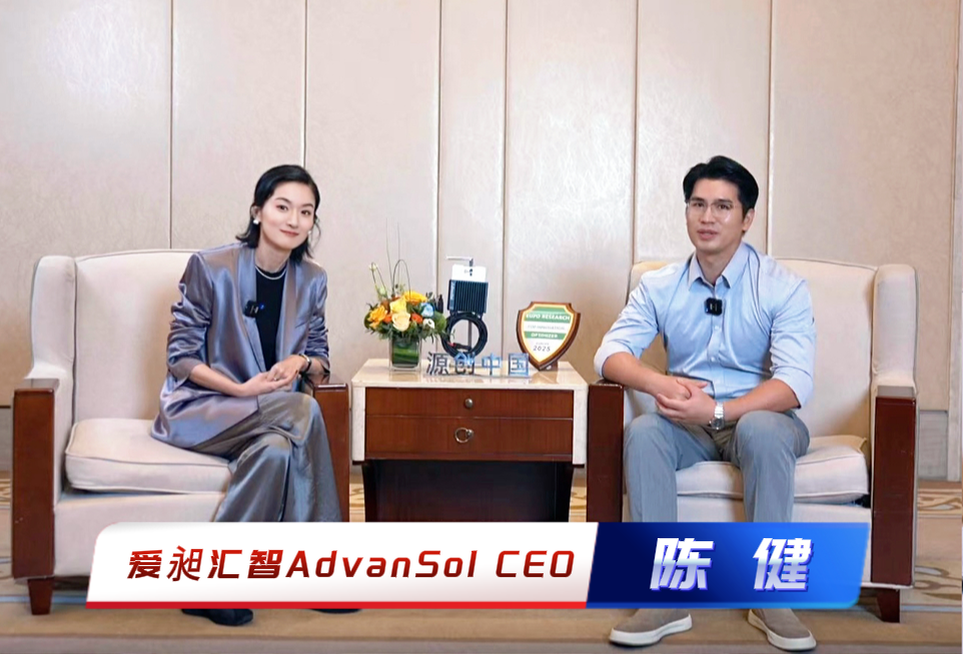
Chen Jian, CEO of AdvanSol
Introduction
Amid the global wave of energy transition and the vigorous promotion of green development, the new energy sector has emerged as one of the most dynamic and promising industrial tracks today. Governments around the world have introduced a series of supportive policies, increasing investment and guidance for the new energy industry. From subsidy incentives to planning guidelines, they are comprehensively promoting the R&D and application of new energy technologies, creating an extremely favorable development environment for the entire industry.
However, the path of new energy entrepreneurship is not without challenges. In recent years, the new energy market, especially the photovoltaic (PV) industry, has experienced cyclical fluctuations and entered a downward phase. Market competition has become increasingly fierce, with enterprises facing numerous challenges such as rising costs and squeezed profit margins. At the same time, the complex and ever-changing international trade situation, including trade barriers and tariff adjustments, has added significant uncertainty to new energy enterprises' overseas market expansion.
It is against this complex backdrop of both opportunities and challenges that a group of seasoned professionals in the new energy industry, driven by dreams and passion, have embarked on their entrepreneurial journey. AdvanSol is one of the most representative entrepreneurial forces in this landscape. Founded in August 2023, the company's team members have mostly worked in the new energy industry for many years, with rich academic and professional experiences, solid technical expertise, and extensive market channels.
Despite being in the early stages of development as a startup, AdvanSol has already made a mark in the new energy entrepreneurship arena. On this occasion, we are honored to invite Chen Jian, founder of AdvanSol, to share his insights and decisions amid the new energy entrepreneurial wave, explore AdvanSol's entrepreneurial story and development strategies in the complex market environment, and jointly look forward to the future direction of the new energy industry.
QUESTION 1
Host: Thank you so much for joining Startup China again! As an entrepreneur, your experience aligns perfectly with our theme today. Would you be willing to share your entrepreneurial journey with everyone during our conversation?
Guest: Of course. We have a deep connection with Startup China. We participated in the first session as an entrepreneurial project to share our story. AdvanSol was founded in August 2023, so we've only been around for a little over two years. From a startup perspective, we're still a "baby." From being an entrepreneurial project sharing at the first session, to becoming a sponsor at the second, and continuing our participation at the third, we have grown together with Startup China. Most of our team members have studied and worked in the new energy industry for years—we're veterans in the field. Of course, compared to many industry predecessors, we're still quite young. However, relying on our accumulated academic and professional experience, we identified new opportunities in the new energy industry and decided to embark on this entrepreneurial journey. The timing of our entry into new energy entrepreneurship may not have been ideal, as 2023 and 2024 saw the new energy industry, especially PV, in a downward cycle. But we believe that industry downturns or troughs are precisely the best times to break through. Competition is relatively weaker during these periods, and enterprises that dare to innovate are essentially laying the groundwork and preparing for the next rebound and peak. This gives us ample time to prepare for the next upswing in the new energy industry.
QUESTION 2
Host: From your remarks, I can sense that although you come from a technical background, you have great confidence in both your company's technology and business model. Does this confidence stem from years of market research or from investor support?
Guest: It comes from both. From an entrepreneurial perspective, when meeting with investors, we must have confidence in ourselves rather than placing our confidence in the investors. Our approach to the market and the track we're in isn't just about seizing an opportunity when we see one. Instead, our team has long been engaged in the system control equipment track, with core team members boasting an average of over ten years of experience in this field, equipped with solid technical expertise and extensive market channels. So when we saw an opportunity for further expansion in this track, we dedicated ourselves fully to it. First and foremost, our confidence comes from our understanding of the track and past experience. On the other hand, investors in China's industrial chain have also empowered us. Several industry capitals have shown interest and invested in us, not only forming equity partnerships but also creating business and industrial synergies. This has been excellent support for us. Especially during the period when new energy is emerging from a trough and gradually recovering, it's difficult for startups to succeed alone. We need to form synergies and jointly explore new market channels and directions. Our collaborative network has given us a great deal of confidence.
QUESTION 3
Host: As an entrepreneur, especially a team leader, you must be mindful of potential dangers at every step. When taking one step, you're probably already thinking about the second, third, and fourth steps. While a niche track has its advantages, it may also face risks such as international trade barriers. Considering both domestic and international markets, what are your next steps in product layout?
Guest: From the very beginning of our project, our team has had a clear and profound understanding of the short-term, medium-term, and long-term development trajectory of the entire track. Take our three-year short-term plan as an example—we already outlined a clear blueprint during the entrepreneurial preparation phase. I even carefully drafted an internal plan that conducted meticulous analysis from multiple dimensions including market dynamics, technological innovation, and business development. Every year, the team conducts in-depth discussions around these core contents to continuously optimize and adjust our direction.
From a market layout perspective, since the inception of our business, we have focused on emerging markets, emerging country markets, and extensive overseas markets. The niche segment we specialize in offers value-added solutions. In the early stages of the project, this solution didn't have significant cost advantages. Our core goals are to reduce the levelized cost of electricity (LCOE), improve return on investment (ROI), and enhance user experience.
We are also acutely aware that there is fierce competition between European and American countries and China in related fields, with many uncertainties surrounding tariff policies and business environments. Therefore, in terms of market positioning, we have strategically chosen emerging overseas markets as our breakthrough point, hoping that the rapid growth of these markets will inject strong momentum into our company's development. For a startup, the huge growth potential in these emerging markets is sufficient to support us in achieving considerable development scale. At the same time, we are closely monitoring developments in European and American markets, patiently waiting for business policies to become clearer so that we can further enter these mature and more profitable high-end markets at the right time.
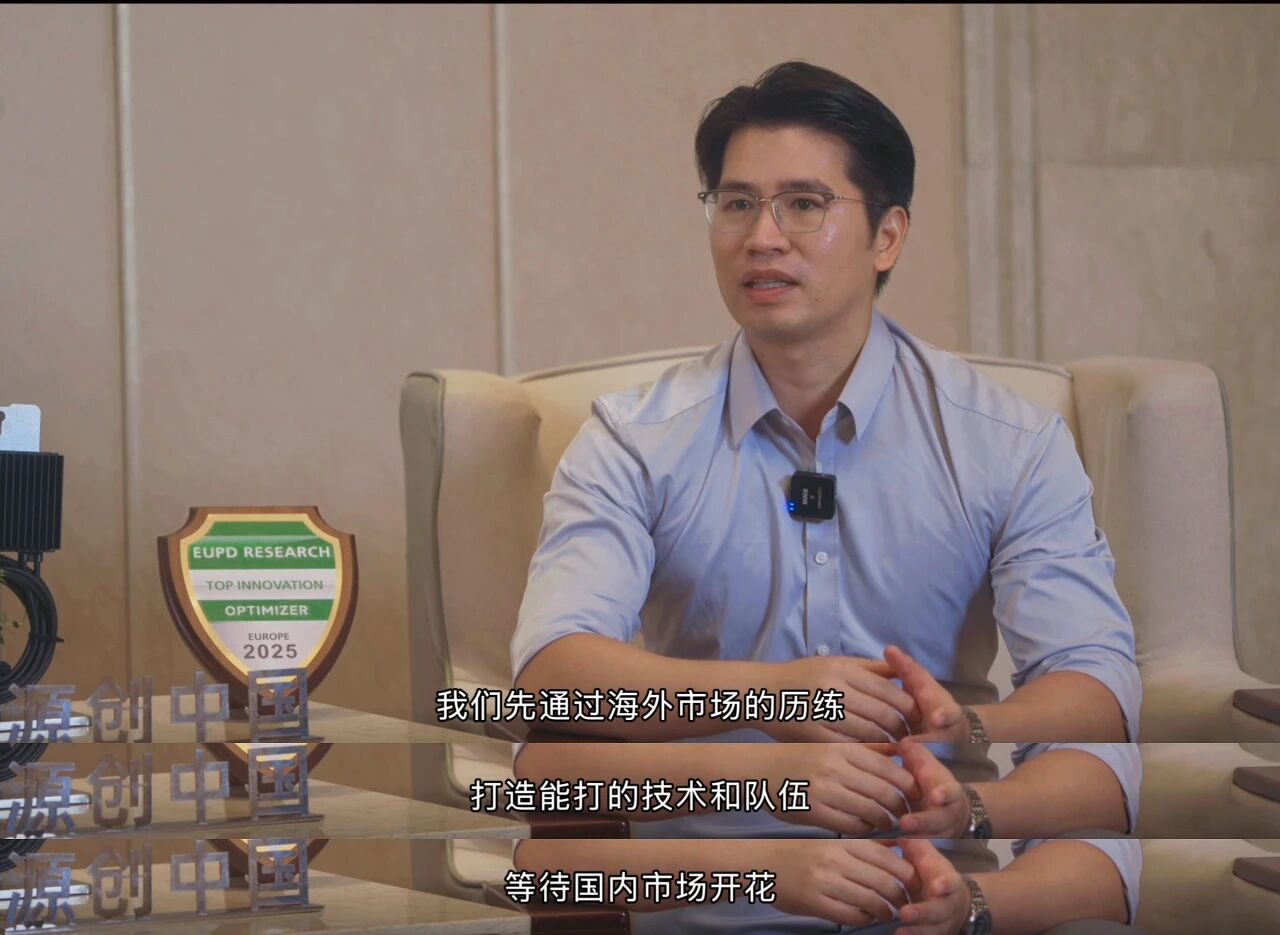
Deep down, we always hold great expectations for the Chinese domestic market. After all, in new energy sectors such as PV and energy storage, the scale of the Chinese market is unparalleled globally. Therefore, we have formulated an overall strategy: first, we will temper our competitive technologies and build a professional and efficient team through practical experience in overseas markets. Then, we will wait for favorable conditions in the domestic market to usher in its vigorous development.
QUESTION 4
Host: Regarding the diversified layout of products, do you have any new products to launch next?
Guest: Next, we will focus on promoting a complete set of PV-storage integrated solutions. We initially entered the PV sector by leveraging our team's technical advantages to launch differentiated PV solutions and applications. With further development and empowerment from our partners, we have expanded beyond just PV to introduce innovative storage solutions based on our PV foundation. This set of solutions differs significantly from existing ones—it is built on a DC-coupled PV-storage integration solution rather than the current AC-coupled solutions. DC-coupled PV-storage integration solutions offer substantial improvements in system simplicity, cost-effectiveness, and efficiency, making them highly suitable for small and medium-sized system applications such as commercial, industrial, and residential use. In recent years, commercial and industrial energy storage has become a hot topic starting from last year, with accelerated expansion this year, leading to fierce competition among Chinese energy storage enterprises. We see this as an excellent opportunity to enter the market. Our next key focus is to leverage our existing differentiated PV solutions to develop an innovative, more cost-effective, and user-friendly DC-coupled storage solution.
QUESTION 5
Host: I've been hearing you mention two high-frequency words: "differentiation" and "fierce competition (juan)". What's your perspective on the phenomenon of "fierce competition"?
Guest: The new energy industry is currently one of the most fiercely competitive sectors in China. China's manufacturing industry and new energy industry both rank first globally. In this field, fierce competition is both a good thing and a bad thing. The downside is obvious: many enterprises bear heavy burdens during this competition, both financially and in terms of technological competition. But the upside is that fierce competition accelerates the market penetration of new technologies and new tracks. For example, in our track, when only a few manufacturers were involved, there was limited progress in cost control through technical solutions. However, as Chinese industries engage in fierce competition, enterprises are motivated to explore new tracks for differentiated competition, channeling excess production capacity or capital into emerging sectors. These emerging tracks, in order to capture market share and secure future development, will invest more resources and further reduce costs through fierce competition. This cost reduction process accelerates the implementation of new technologies and expands market share, which isn't necessarily a bad thing for innovative companies in the industry, as it grows the overall market pie. For instance, after our upstream supply chain enters a growth phase, it begins standardization and fierce competition, which helps us achieve rapid cost reduction. Instead of just a few enterprises reducing costs through technological innovation, the entire industry is working together through competition to drive down costs. This accelerates the expansion of the market pie, allowing us to get a larger share. Therefore, fierce competition has made many impossible things possible in China, and accelerated their realization.
QUESTION 6
Host: As an entrepreneur, would you recommend entrepreneurship to people who have entrepreneurial aspirations? We've talked to many entrepreneurs, and many of them say that entrepreneurship is extremely tough and advise others against it. What's your take on this?
Guest: I've discussed this with many people. Even in the early stages of my entrepreneurship, I had in-depth conversations with senior industry veterans and peers. At that time, the new energy industry was in a trough, and 80% to 90% of people advised me against entering this field. But in my view, life is a unique experience in itself. If you can thoroughly think through and answer the following questions, then it's worth taking the leap:
First is the question of differentiation—what makes what you're doing different from others? Second, why are you the one who can stand out? When a business boom comes, it seems even pigs can fly, but the real test comes when the boom subsides: can you avoid being the "pig" that falls? Therefore, during industry downturns, it's crucial to have a clear understanding of how you will survive and persist. The final question is, as a founder or core team member, can you withstand significant pressure? If you can give yourself satisfactory answers to these three questions, then go for it. After all, life is an experience, and whether you succeed or fail, it's all valuable. Even if you fail, it's a rare experience.
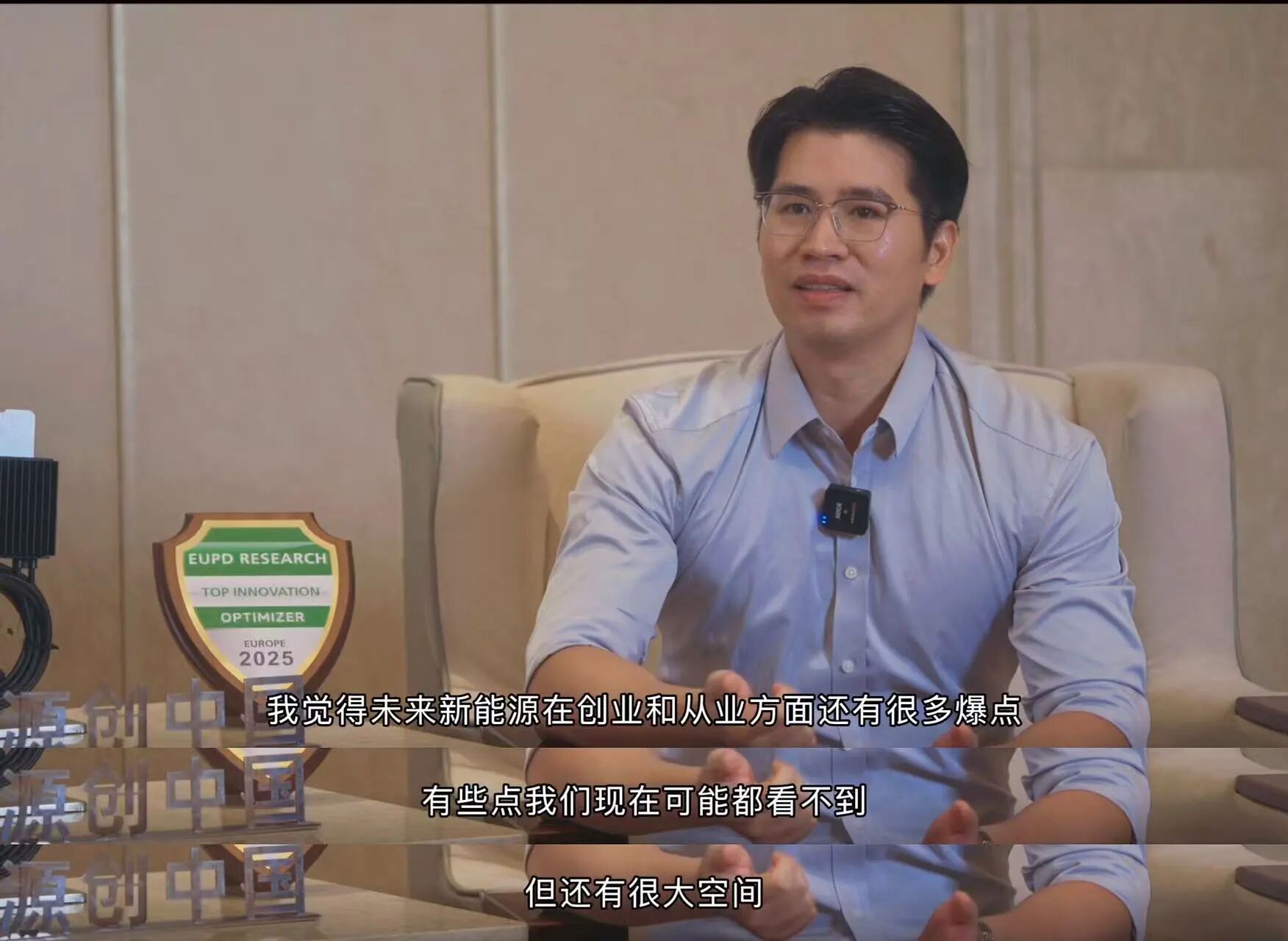
The new energy industry we're in is in a massive and rapidly growing phase, still in its middle stage of development. Some people think new energy is nearing its end with few opportunities left, but I disagree. I've discussed this with friends and former classmates, comparing the new energy industry to the IT industry in the last Kondratieff wave. The first wave of wealth in the IT industry was led by companies like Apple, Dell, and Lenovo during the infrastructure-building phase, when people needed hardware devices like a computer and a mobile phone for everyone. The new energy industry is currently in a large-scale infrastructure-building phase, with the proportion of infrastructure still not very high, leaving ample room for development.
The second wave of wealth in the IT industry was driven by companies like Google, Microsoft, Amazon, and Alibaba. After infrastructure completion, new infrastructure inevitably gives birth to new lifestyles and new models that change people's experiences—these new models are all new services derived from the new infrastructure. The first phase of infrastructure building in the new energy industry is not yet complete. Once it is, this infrastructure will also nurture new lifestyles. Therefore, I believe there are still many unknown opportunities for entrepreneurship and career development in the future new energy industry, some of which are even beyond our current imagination, but the development space is undoubtedly huge.
If you have carefully considered the questions mentioned earlier, it's worth taking the leap. Moreover, new energy is a long-term track with great potential—even if you experience a setback or two, it may not be a major issue.
QUESTION 7
Host: From what I've heard, you seem to be a very emotionally stable experientialist. However, experientialists can be divided into two types: some believe that experientialists accept all experiences and thus maintain minimal emotional fluctuations; others think that experientialists embrace emotional highs as well as emotional fluctuations and lows. When leading your entrepreneurial team to grow together, how do you handle these issues?
Guest: I can understand both perspectives—it's almost a philosophical question. The key is whether you can be consistent with yourself. As long as you can convince yourself, either approach is fine. Personally, I belong to the first type. I make a choice, take action, and can accept both success and failure as part of the experience, so I maintain a relatively peaceful mindset. This ties back to what I mentioned earlier about having resilience—entrepreneurs, in particular, need to have strong resilience. But at the same time, you must remain sensitive to market and technological changes. This is something that requires balanced management. If your experiences are consistent with your own beliefs, then just stay true to your path.