




Background
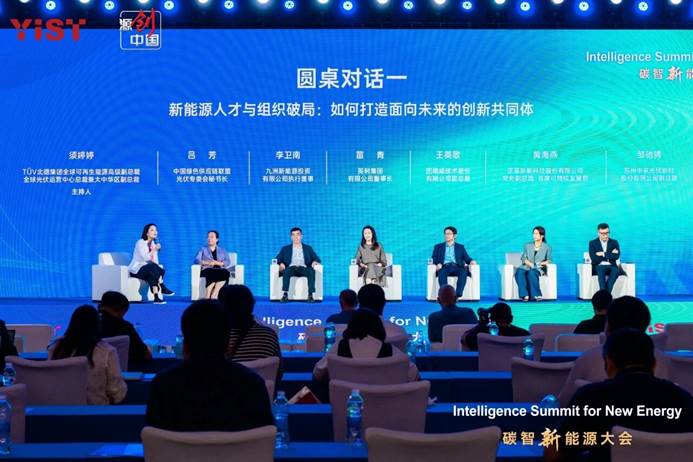
In October 2025, during the panel discussion session of the Intelligence Summit for New Energy, guests conducted in-depth discussions around the theme of "Breaking the Bottleneck of New Energy Organizations and Talent". Lü Fang, Secretary-General of the Photovoltaic Professional Committee of the China Green Supply Chain Alliance, delivered a series of thought-provoking insights at the conference, charting a clear course for the future development of the photovoltaic industry.
PART 01: The Rise of the Yangtze River Delta as a Photovoltaic Technology Harbor
Lü Fang pointed out that the Yangtze River Delta region is gradually emerging as a photovoltaic technology harbor. Taking the performance of foreign-invested automobile companies in the first half of this year as an example, most foreign automakers have been in a state of continuous decline, while Toyota has forged a unique "Philosophical Path".
Toyota has adopted the "One R&D" system, integrating its R&D centers in China with those of FAW, GAC, and BYD into a "Super Brain". This has broken down technical barriers between enterprises, while also prioritizing talent cultivation, generating strong synergies, and enhancing research into intelligent electrification in the automotive industry. According to Japanese media reports, Japan is experiencing an intense migration of intellectual property, shifting from Aichi Prefecture to the Yangtze River Delta region in China.
Similarly, China's photovoltaic industry is also showing a trend of clustered development in the Yangtze River Delta. A transformation that begins with R&D, achieves fruition through product innovation, and culminates in organizational restructuring is quietly underway. Whether China's photovoltaic industry embraces this change proactively or responds passively, it will witness the far-reaching impacts brought about by this transformation.
PART 02: The Emergence of a New Growth Culture
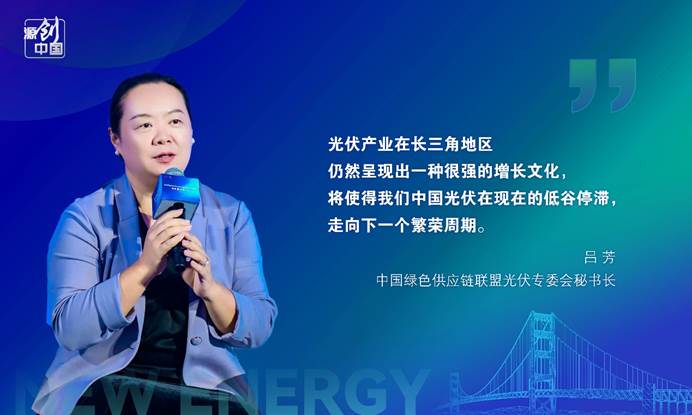
The three winners of the 2025 Nobel Prize in Economics all advocate that innovation drives economic growth, even advocating disruptive innovation to propel economic development. In the photovoltaic industry, a new growth culture is taking root in the Yangtze River Delta region.
Throughout history, we have experienced multiple periods of intellectual explosion. Fortunately, today, the photovoltaic industry in the Yangtze River Delta continues to demonstrate robust growth momentum. This new growth culture has the potential to lift China's photovoltaic industry out of its current trough and stagnation, ushering in a new cycle of prosperity.
In this process, we also need to focus on conflict management to ensure that the industry maintains stability while pursuing innovative development.
PART 03: PV Global Expansion: The Shift from "Involution" to "Internal Transformation"
Toyota's strategic declaration of "Benefiting the World, Empowering China" at this year's China Auto Show has provided a fresh perspective for photovoltaic enterprises that are expanding overseas and vigorously promoting their own brands. As Dr. Huang Qiang stated, for Chinese PV enterprises going global, it is essential to "turn foreign lands into home".
Instead of engaging in constant "trade wars and barrier wars", we can adopt a different mindset: moving from universal outreach to localized rooting, and ultimately achieving resonance with local markets. We should regard PV global expansion as a transformative journey from being a "guest" to becoming a "host".
Both the global photovoltaic and automotive industries need more co-growth enterprises, shifting from a single output model to a collaborative symbiotic model. Although China's photovoltaic industry has encountered certain blockades and suppressions in its global expansion, the global supply chain cannot function without China, nor can it be separated from China.
PART 04: PV School: The Vanguard Force for PV Global Expansion
The PV School of YIST offers a new approach for the global expansion of the photovoltaic industry. When Toyota entered China, it first established a "Skilled Worker Training Center". Similarly, PV School is expected to play a comparable role as Chinese PV enterprises expand overseas.
In the process of PV global expansion, prioritizing standards, concepts, training, and talent is crucial. Through PV School, we can build international influence for the photovoltaic industry, enabling Chinese PV enterprises to better root and develop in overseas markets.
Conclusion
In her concluding remarks, Lü Fang emphasized that the platform value of YIST lies in "providing carriers for collaborative innovation, nurturing soil for growth culture, establishing pathways for overseas transformation, and building systems for talent development".
As global energy transition enters a deeper phase, the photovoltaic industry in the Yangtze River Delta is driven by the dual engines of "Technology Harbor + Co-Growth Ecosystem", providing core support for China's photovoltaic industry to leap from "scale leadership" to "rule-setting". As she put it: "When we plant our standards, talents, and concepts around the world, China's photovoltaic industry will truly establish its 'home court' globally."
About The Yangtze Institute for Solar Technology
As a core platform for collaborative innovation in the photovoltaic industry across the Yangtze River Delta region, YIST drives technological breakthroughs, standard outputs, and talent development through various carriers including industry standards, PV School, joint laboratories, and concept validation funds, helping China's photovoltaic industry build new global competitive advantages.