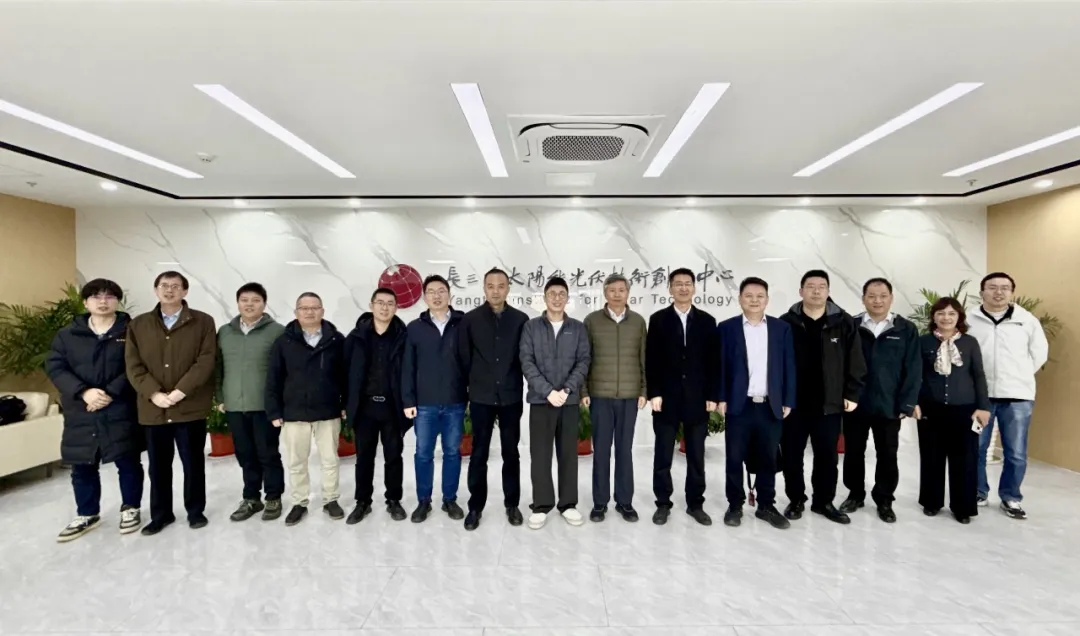
On the morning of December 12, 2025, Mr. Wei Nan, Senior Consultant of CITIC Pacific Energy Co., Ltd., led a 10-member core new energy team to visit YIST. He gathered together with Professor Shen Hui, Director of YIST, Deputy Director Shen Zhenjue, and the heads of various research institutes. The attendees jointly reviewed the development context of photovoltaic technology and industrialization at home and abroad, and conducted in-depth exchanges on the innovation breakthroughs and industrial implementation needs in 5 cutting-edge fields of common concern to the industry, including building-integrated photovoltaics (BIPV), perovskite solar cells, photovoltaic infrastructure for unmanned aerial vehicles (UAVs), photovoltaic power forecasting and electricity market transactions, as well as air-ground collaborative inspection of new energy stations. The exchange was held in a lively atmosphere and reached a wide range of consensus.
Tracing the Industry Evolution from the Photovoltaic Science and Technology Museum
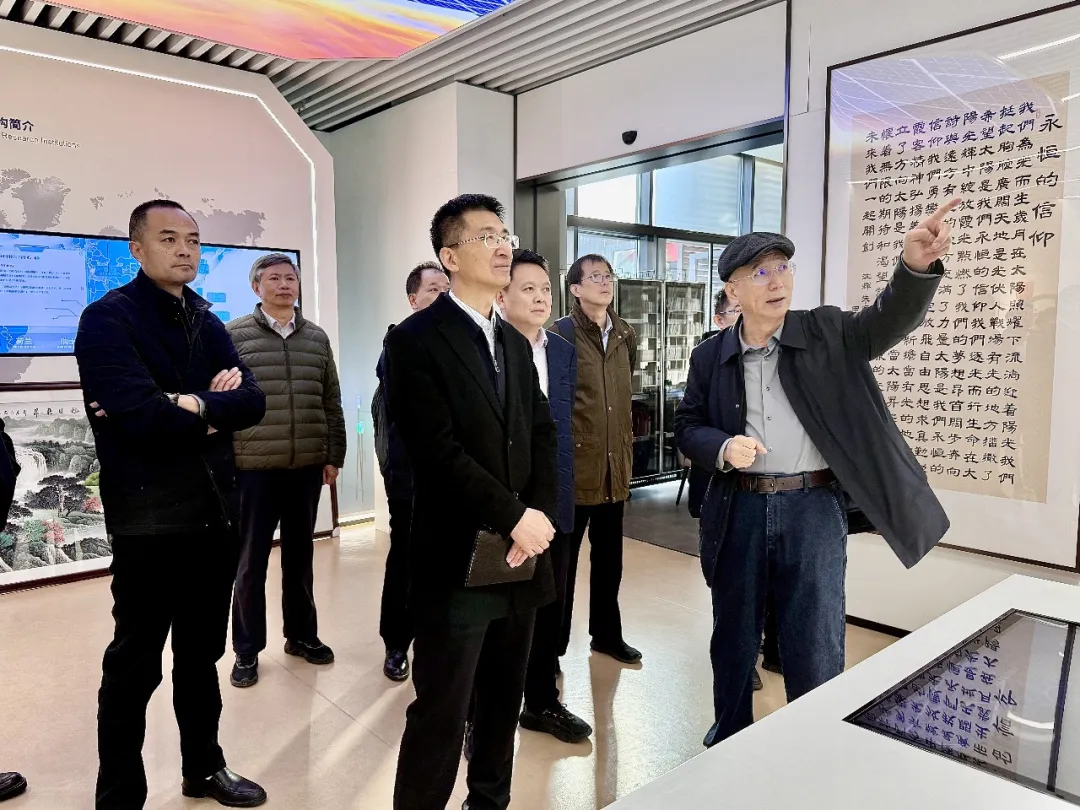
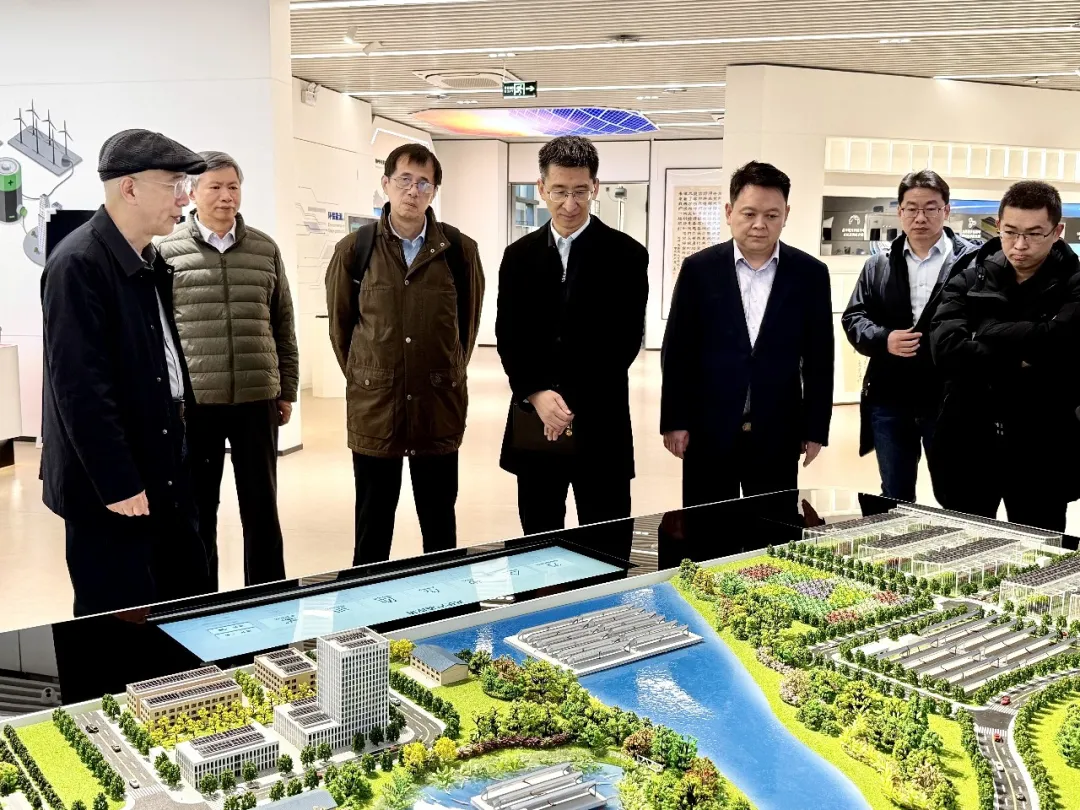
Led by Director Shen Hui, the new energy team of CITIC Pacific Energy Co., Ltd. visited the Science and Technology Exhibition Hall of YIST, where they gained a systematic understanding of the development history spanning from silicon-based solar cells to perovskite technologies. The interactive sand table themed "Photovoltaics + Architecture" in the exhibition hall integrates GIS (Geographic Information System) and AI algorithms, providing scheme optimization support for demonstration projects. The relevant exhibition content aroused strong interest among the visitors.
Can BIPV Technology Disrupt the Traditional Construction Industry
The first focus of the discussion was the industrialization breakthrough of BIPV (Building-Integrated Photovoltaics) technology. YIST highlighted the convenience of installation and maintenance as well as the cost advantages of BIPV technology, along with the necessity and urgency of standardization research. Both sides engaged in lively discussions on the technical application scenarios.
How Many Hurdles Must Be Overcome for Perovskite Commercialization
YIST introduced the marketization progress of perovskite tandem technology, with a focus on the research status of perovskite module efficiency and testing. In-depth exchanges were conducted between the two parties regarding the challenges of technology industrialization and commercial prospects.
How Can UAVs Restructure the Logic of Photovoltaic Infrastructure
Technical experts from YIST presented the innovative application of UAV construction technology in photovoltaic infrastructure, expounding on the remarkable optimization effects of UAV construction schemes on traditional construction models. Both sides discussed the technical implementation details.
How Can Air-Ground Collaborative Inspection Solve Operation and Maintenance Dilemmas
YIST introduced the R&D and application of the air-ground collaborative inspection system for new energy stations in its incubated projects, with an emphasis on the technical characteristics of the system and its role in improving operation and maintenance efficiency.
From Technical Dialogue to the Leap Toward Industrial Alliance
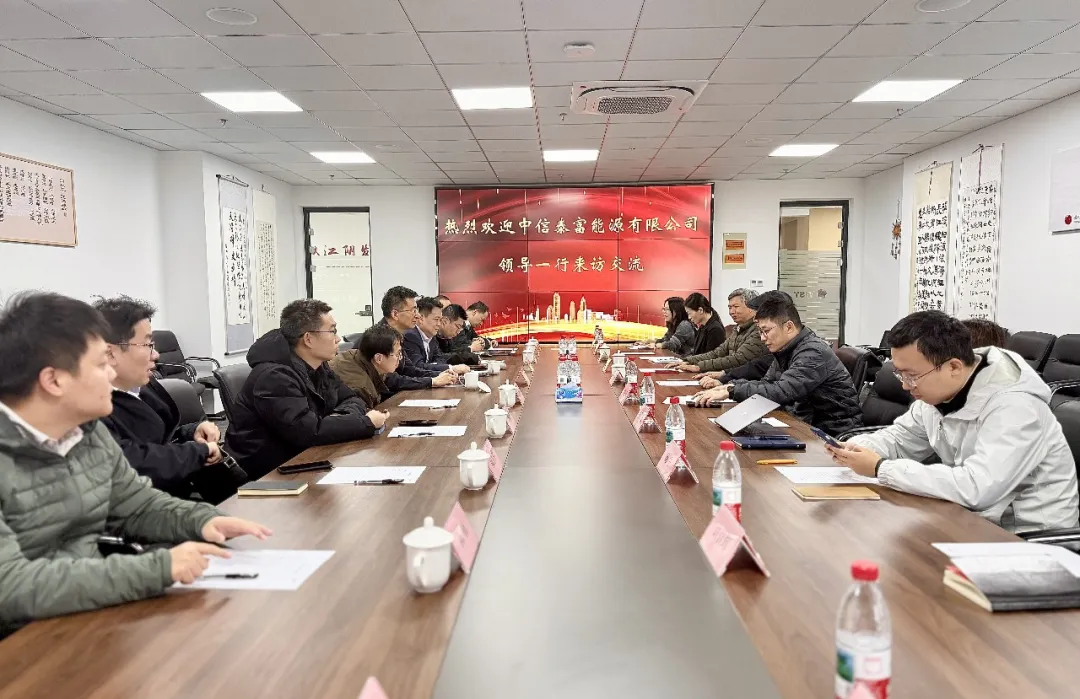
In the cooperation outlook session, Senior Consultant Wei Nan stated that CITIC Pacific Energy is willing to carry out in-depth cooperation with YIST in three dimensions: technical research, project tackling, and industrial implementation. The two sides agreed to establish a joint working group, where R&D heads of both parties will promote precise docking, and launch the first batch of special projects such as BIPV standard formulation.
Top Tech Experts Provide Insightful Guidance for Industry Development
In closing, Director Shen Hui emphasized that the essence of the energy revolution lies in technological revolution. The current involution-driven competition within the photovoltaic industry is bound to evolve from price competition to value competition, with technological competition at its core. Only by translating technological breakthroughs into systematic solutions can we truly unleash the strategic value of photovoltaics as a major energy source. This in-depth dialogue has laid a solid foundation for technological collaboration and industrial innovation between the two parties, heralding significant progress in the integration of technological R&D and industrial implementation in the future.