




Background
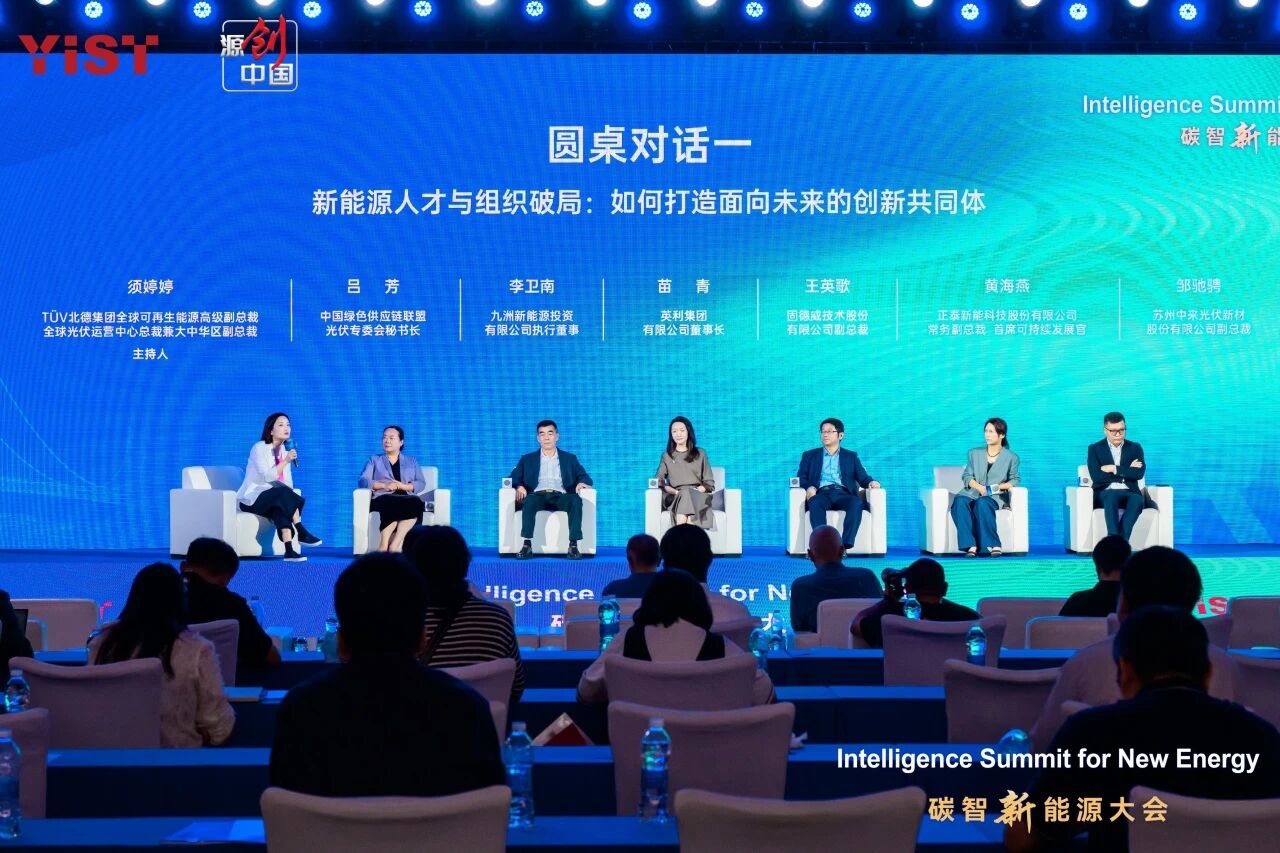
In October 2025, during the panel discussion session of the Intelligence Summit for New Energy, the guests conducted an in-depth discussion around the theme of Breaking the Impasse for New Energy Organizations and Talent Development.
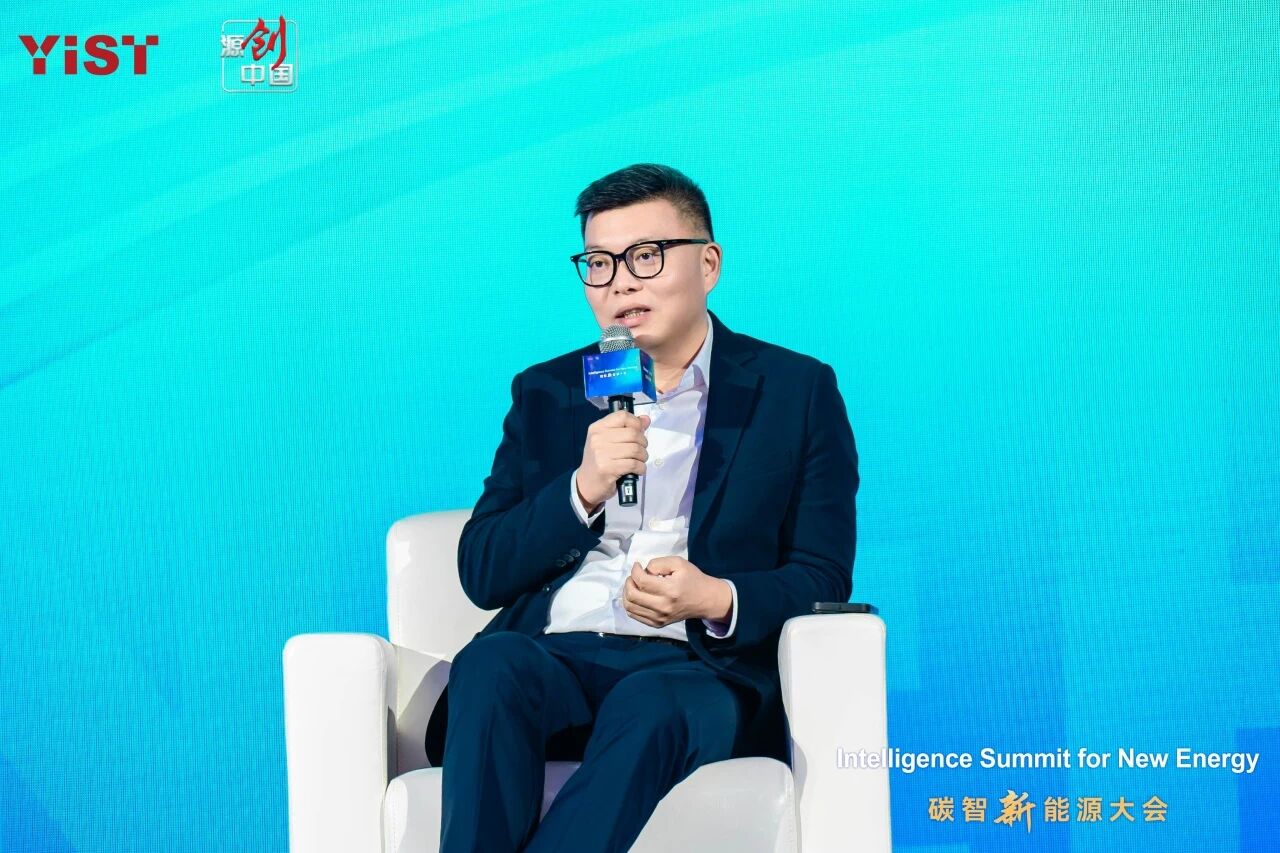
Zou Chicheng, Vice President of Jolywood, provided an in-depth analysis of the development stages and breakthrough paths of the photovoltaic industry in his speech. He emphasized that the industry must break the current closed mindset at this stage; by building an innovation community, cultivating international talents and giving play to the role of platforms as bridges, it will drive the photovoltaic industry to shift from a state of involution to one of openness and collaboration.
Three Stages of Industrial Evolution: From Import Dependence to Innovation Bottlenecks
Reviewing the development course of the photovoltaic industry, Zou Chicheng pointed out that the industry has gone through three stages: In the initial stage, it was dominated by leading enterprises, with a high degree of dependence on imports for equipment and raw materials; in the middle stage, along with the wave of equipment localization, equipment manufacturers and manufacturing enterprises formed a joint innovation model; at present, it is facing the challenge of innovation closed-loop —— declining profit margins and intensified involution have led to reduced R&D investment, making it imperative to open up the transformation channel between basic university research and industrial applications. "The cooperation between Jolywood and YIST is a practical response to this. We expect YIST to serve as a bridge for technology transformation, enabling the rapid application of university laboratory achievements in enterprise production lines."
Innovation Community: From Individual Breakthroughs to Ecological Collaboration
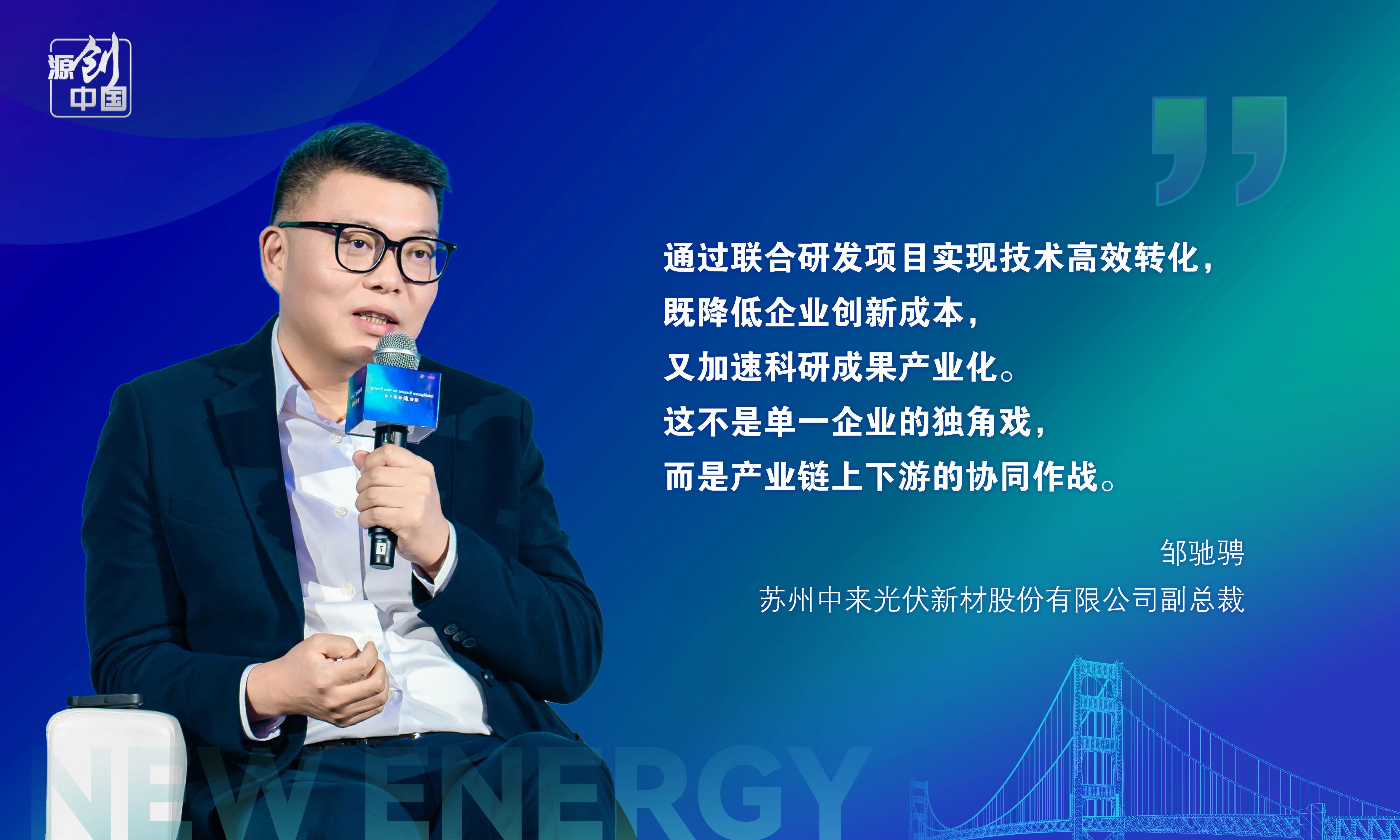
When talking about the path to breaking the impasse in the industry, Zou Chicheng proposed the innovation community solution. He stated that the cooperation model between Zhonglai and the Photovoltaic Center is worthy of promotion: the implementation of joint R&D projects enables efficient technology transformation, which not only reduces the innovation costs of enterprises but also accelerates the industrialization of scientific research achievements. "This is not a one-man show by a single enterprise, but a collaborative effort of the upstream and downstream of the industrial chain." He called on more enterprises to join the innovation community, replacing vicious competition with openness and sharing, so as to strike a balance between cost reduction and innovation.
Talent Cultivation: From Technical Specialists to International Interdisciplinary Talents
To address the talent shortage, Zou Chicheng argued that the current PV School focuses on nurturing technical R&D professionals, and it needs to transform toward cultivating leading international talents in the future. "For enterprises to go global, they need not only engineers but also interdisciplinary teams who understand technology, are versed in laws, and excel at negotiations," he pointed out. Both private and state-owned enterprises are confronted with a shortage of international talents. He suggested that the Photovoltaic Center should collaborate with universities and enterprises to develop a curriculum system that integrates technical capabilities, international trade rules, and business negotiation skills. "Only by breaking the mindset of 'reinventing the wheel' can we truly participate in global competition."
Investment Logic: Platform Empowerment to Mitigate Overseas Expansion Risks
From an investment perspective, Zou Chicheng emphasized the core role of platforms in risk control. "Investors need to professionally screen high-value projects, and enterprises venturing overseas need to pool efforts to mitigate risks," he stated. He believes that as a bridge connecting domestic and international parties, the Photovoltaic Center can leverage its resource network to link with local stakeholders and provide enterprises with risk-minimized solutions for cooperation. "This is not about pursuing the highest short-term returns, but about achieving multi-party win-win outcomes through platform resources — this is the sustainable investment logic."
Conclusion
In his concluding remarks, Zou Chicheng called on the photovoltaic industry to embrace international cooperation with an open mindset. "Only through the combination of innovation communities, international talents, and platform-based collaboration can China's photovoltaic industry transform its scale advantage into an ecological advantage."
About the Yangtze Institute for Solar Technology
As a core platform for collaborative innovation in the photovoltaic industry across the Yangtze River Delta region, YIST drives technological breakthroughs, standard formulation and talent cultivation through such carriers as industry standards, PV School, joint laboratories and concept verification funds, helping China’s photovoltaic industry build new global competitive advantages.